
Bali Digital Nomad Visa
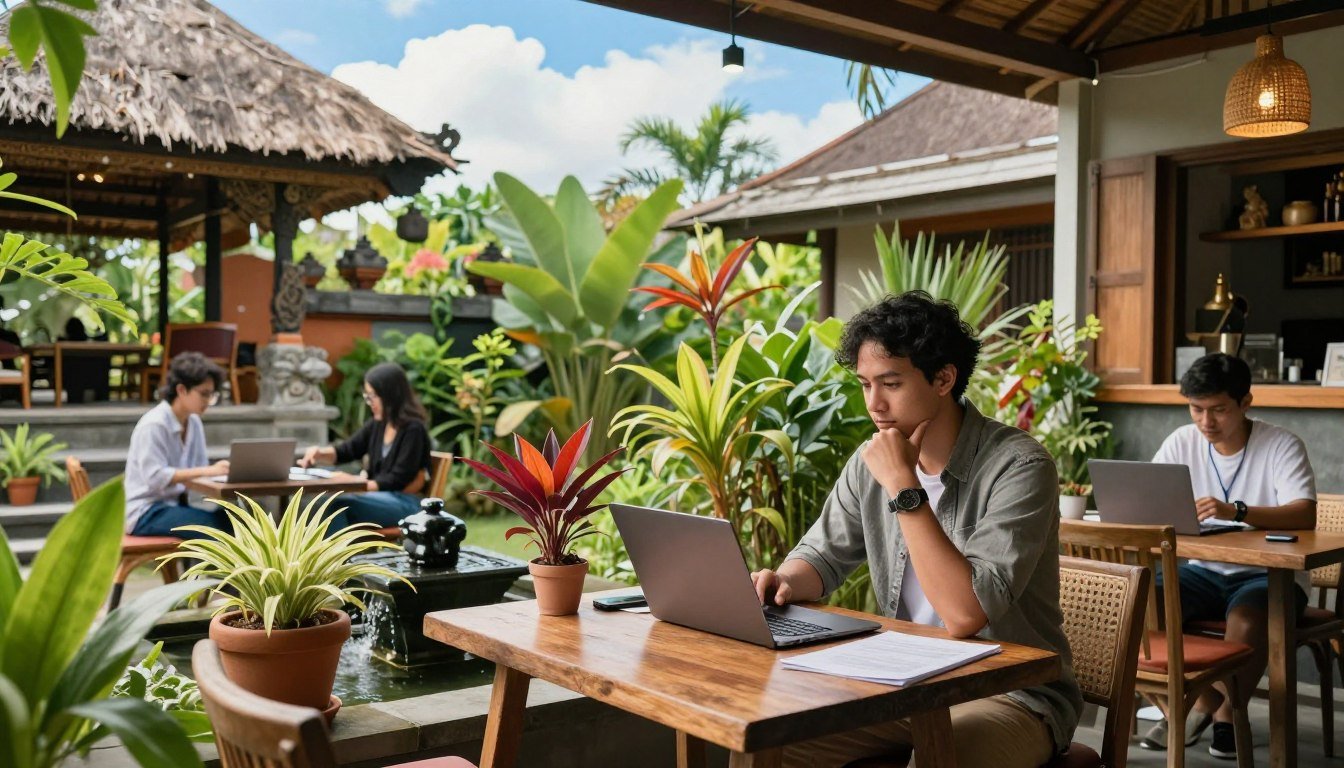
Bali Digital Nomad Visa has become one of the world’s most popular remote work destinations, attracting more than 30,000 professionals every year. With tropical beaches, affordable living, and vibrant coworking communities, Bali offers the perfect balance between productivity and lifestyle.
If you plan to work remotely in Bali, you can expect reliable Wi-Fi in coworking spaces, cafes, and social restaurants across hotspots like Canggu, Ubud, and Seminyak. These spaces make it easy to stay productive while enjoying a slower and more inspiring way of life.
The growing popularity of the Bali digital nomad lifestyle has also encouraged Indonesia to introduce more flexible visa options for international remote workers. Understanding the Bali Digital Nomad Visa and other legal stay options is one of the most important steps before relocating.
This guide covers everything you need to know about digital nomads in Bali, including where to work, how to stay legally, living costs, and how to create the ideal work-life balance on the island. By the end, you will have a clear roadmap for building your remote career in Bali.
Understanding the Bali Digital Nomad Visa Landscape
Recent policy shifts have broadened long-stay options for remote professionals on the island.
The local government has moved to create a flexible regime that supports remote worker needs. New laws expand how you can establish a long-term base and balance work with island living.
Co-working spaces and digital cafés now form a strong network. These spots help you stay productive while enjoying local culture.
- Improved infrastructure supports steady internet and professional facilities.
- Policy changes aim to attract high-value professionals who boost the local economy.
- The growing community offers peer support and networking for digital nomads.
| Feature | What it means for you | Practical tip |
|---|---|---|
| Flexible entry options | More routes for long-term stays | Check eligibility early |
| Work-friendly spaces | Reliable Wi-Fi and meeting rooms | Book desks ahead during peak season |
| Supportive policy | Encourages professional living and work balance | Engage local services for paperwork |
Bali Digital Nomad: Exploring Available Visa Options
Your choice of permit affects access to co-working spaces, legal work options, and local life. Pick a route that matches the time you need and the type of work you do.
B211a Visit Visa
The B211a is a short-stay choice for stays of 30 to 60 days. You can extend it up to 180 days in total.
This permit is easy to apply for before you arrive. It does not allow local freelance work, so it’s best if your income comes from a company outside the country.
Indonesian Remote Worker Visa (KITAS)
The KITAS supports longer stays, offering residency rights for five to ten years. It requires more paperwork but gives stability for multi-year living and work.
Eligibility often depends on your home country; over 85 countries participate. Expect to show proof of income or an employment contract from outside Indonesia.
| Feature | B211a Visit Visa | KITAS Remote Worker Visa |
|---|---|---|
| Length | 30–60 days (extensions to 180 days) | 5–10 years |
| Work permission | No local freelance work allowed | Permits legal long-term work |
| Application ease | Streamlined pre-arrival application | Rigorous process, more documentation |
Digital Nomad Visa Bali : Eligibility Requirements
Start here: confirm the basics so your application moves quickly.
Passport: you must hold a passport valid for at least 12 months from your entry date.
Financial proof: show an annual income of $60,000 USD and maintain a minimum bank balance of at least 2,000 USD to meet the funding requirements.
Employment: include a full contract from a company based outside the host country to verify your remote work status.
Other mandatory documents include a recent 4 cm by 6 cm color photo on a white background, valid health and travel insurance that covers medical and COVID-19 expenses, and proof of onward travel such as a return ticket.
Collecting these items reduces delays and keeps you compliant with local rules for digital nomads applying for a nomad visa.
| Item | Required detail | Why it matters |
|---|---|---|
| Passport | ≥ 12 months validity | Prevents denial at entry |
| Financials | $60,000 annual income; at least 2,000 in bank | Shows you can support yourself |
| Employment proof | Contract from outside the country | Verifies remote work eligibility |
| Insurance & travel | Comprehensive health insurance; onward ticket | Covers emergencies and exit plans |
Bali Digital Nomad Visa the Application Process
Begin by gathering every required paper so uploads go smoothly when you log in. This saves time and reduces errors during the online application.
Preparing Your Documentation
Collect your passport, recent bank statements that clearly show at least least 2,000, proof of income, and your employment contract from your home company.
Also have valid health and travel insurance documents and a passport-style photo ready for upload.
Using the Online Portal
Create an account on the official Directorate General of Immigration portal to start the application. The process usually takes one to two weeks.
Upload all files before submitting fees. You will get an email when your application is approved.
Post-Approval Steps
After approval, download your e-visa and save both digital and printed copies for arrival checks. You have a 90-day window to enter the country; the duration begins at the border.
| Step | What to do | Timing |
|---|---|---|
| Create account | Register on immigration portal | Day 1 |
| Submit documents | Upload passport, income, bank | Before payment |
| Post-approval | Download e-visa; carry copies | After email notice |
Managing Visa Costs and Fees
Knowing exact payment methods and fee ranges saves time and stress. For the B211a, typical application fees range from $105 to $205 depending on duration and option.
Pay online with a valid credit or debit card; the immigration portal does not accept overseas bank transfers. Keep a copy of your payment confirmation—official staff may request it at entry.
Budget beyond the application fee. Add costs for document translation, mandatory travel and health insurance, and any certified copies you need. Remember: fees are usually non-refundable.
- Confirm exact amounts on the official government site before you pay.
- Save receipts in your account and in a secure folder for travel day checks.
| Fee item | Typical range | Notes |
|---|---|---|
| Application fee (B211a) | $105–$205 | Varies by duration; non-refundable |
| Translation & document prep | $20–$150 | Depends on number and language |
| Mandatory insurance | $50–$300 | Health and travel coverage required |
| Payment method | Credit/debit card only | Keep payment confirmation |
Manage these costs early to keep your financial picture clear. That helps you focus on arrival and settling into the local community as a bali digital nomad on a digital nomad visa.
Handling Tax Obligations as a Remote Worker
Understanding how long you spend in-country is the first step to handling tax duties correctly.
If you remain over 183 days within any 12-month period, tax authorities may treat you as a local tax resident. That status can subject your worldwide income to local taxes, so counting days matters.
Determining Tax Residency Status
Keep a clear log of arrival and departure dates. Use calendar notes, stamped entry records, or travel apps to track days.
Understand how your home country’s rules compare to local law. Differences can affect whether you owe double tax or qualify for exemptions.
Professional advice is common. Many remote workers hire tax advisors to avoid mistakes and to use treaties that reduce double taxation.
| Rule | What it means | Action for you |
|---|---|---|
| 183-day test | May trigger tax residency | Track days; plan stays under limit if desired |
| Worldwide income | All earnings could be taxed locally | Review treaty relief and local thresholds |
| KITAS and evolving rules | Some pathways may limit local taxes | Ask a specialist about current regimes |
Plan ahead if you intend to stay for the full year. Good records and timely advice protect your income and let you enjoy living and work overseas with confidence.
Staying Connected with eSIM Technology
Using an eSIM is one of the easiest moves you can make as a digital nomad to keep work running smoothly. It removes the need for physical SIM swaps and speeds up setup when you arrive somewhere new.
Airalo offers eSIM packages for more than 200 countries, so you can stay linked to your home services and local networks without roaming fees.
Benefits include tethering data to your laptop, topping up on the go, and saving up to eight profiles on modern phones. That flexibility helps digital nomads manage personal and work lines in one device.
- Avoid roaming fees: choose local plans instantly.
- Keep meetings stable: tether your phone to a laptop when Wi‑Fi lags.
- Top up fast: add data from anywhere at any time.
For a nomad who values uptime and simple logistics, an eSIM is a practical tool for travel and remote work. It keeps you connected, helps share your day with loved ones, and reduces stress when you move between countries as a digital nomad.
Financial Planning for Your Island Move
Start your financial plan by listing one-time move costs and your monthly budget. This gives you a clear view of what to save and when to pay.
Open a multi-currency account such as Wise to get mid-market exchange rates and hold funds in 40+ currencies. A second account helps you send and receive payments with low fees.
Set aside money for application and visa fees, rental deposits, and possible real estate costs. Make sure your bank statements show the required minimum balance and steady income to meet eligibility rules.
Buy comprehensive health and travel insurance before you leave. That step protects you from unexpected medical bills and emergency evacuations.
- Research living costs so your daily budget covers food, co-working spaces, and leisure.
- Keep passport, proof of income, and other key documents organized for quick verification.
- Plan for taxes and track days if you might trigger residency rules.
| Item | Why it matters | Action |
|---|---|---|
| Account | Lower fees; easier transfers | Open Wise or similar before travel |
| Bank statements | Prove income and balance | Maintain steady deposits for 3–6 months |
| Insurance | Cover emergencies | Buy comprehensive policy with medical & travel cover |
Plan ahead and you can focus on work and enjoy island life with fewer surprises. When you apply, having tidy finances makes the process fast and stress-free.
Conclusion
Wrap up your plans with a checklist that keeps paperwork, finances, and health cover in order. Confirm your application files, bank proof, and required photos before booking travel. That short review saves time and stress when you arrive.
Choose the right permit—whether a B211a or a longer pathway—and match it to your work goals. Keep track of days in the country to avoid unexpected taxes.
Buy solid insurance, set a budget for costs, and use tools like eSIMs and multi‑currency accounts to simplify daily life. This guide gives you the core need to know so you can start your digital nomad visa journey with confidence.